Choosing Natural Bedding: A Guide to Materials from Vispring, Coyuchi, and Sferra
A considered sleep space begins with the fabric that touches the skin. This guide revisits how natural bedding—from long-staple cottons to linen and wool—shapes breathability, comfort, and sustainability. We explore material types, weave textures, and the credentials that separate the genuinely responsible brands from the merely well-styled. In the realms of Vispring, Coyuchi, and Sferra, luxury is not only about softness; it’s about a philosophy of sleep that treats the body and the planet with equal care.
Across eras and continents, three distinct figures—each tethered to different times and temperaments—offer a lens through which to examine our bedding cravings. The discussion travels from a late-19th-century artisan’s dedication to craft, through a mid-20th-century design ethic that married form to function, to a contemporary sustainability ethos that treats textiles as part of a broader ecological conversation.
A Canvas of Natural Fibers: The Core of Comfort
Natural bedding centers on three fibers that repeatedly surface in the luxury segment: cotton, linen, and wool. Each fiber carries a profile—feel, drape, and climate control—that can dramatically alter sleep quality. The brands under review—Vispring, Coyuchi, and Sferra—are not merely purveyors of fabric; they are curators of textile genealogies, each name pressed into the narrative of sleep as an everyday act of self-care.
Cotton, in its long-staple form, is prized for smoothness and resilience. It resists pilling and presents a durable surface that preserves a crisp or a relaxed hand, depending on the weave and finishing. Sferra’s long-staple cotton, often presented in sateen or percale weaves, emphasizes a gentle sheen and a breathable warmth that feels luxurious without sacrificing airiness. Coyuchi returns us to organic roots—certified by bodies that measure soil health and fiber integrity—offering bedding that is friendly to the sleeper and to the soil alike. Vispring embodies a philosophy of refined materiality, where cotton is often paired with springs and a history of hand-finished textures, creating a tactile language that announces itself in the room’s quiet corners.
Linen, derived from flax, brings a cooler, crisper sensation, especially in warm climates or summer months. It carries a natural irregularity that readers often describe as “woven poetry”—a texture that deepens with each wash and uses its own gentle creases as a telltale sign of character and sustainability. Coyuchi’s linen offerings—though robust—often couple with organic cottons to create a breathable blend that keeps the body temperate without sacrificing the refined look of luxury bedding.
Wool, particularly in the form of washable or finely brushed variants, brings exceptional warmth and moisture management. It’s not merely for winter; wool’s temperature-regulating properties render it a versatile ally across seasons. Paloma Earth or Paloma-inspired wool blends often show how wool can be integrated into a modern bedroom aesthetic without feeling rustic or inaccessible. The practical appeal lies in wool’s resilience to odour and its capacity to wick moisture, maintaining an interior climate closer to the body’s ideal comfort zone.
Brand Profiles: Vispring, Coyuchi, and Sferra
Vispring, a name that evokes the old world of hand-stitched craftsmanship, situates its bedding within a lineage of luxury that leans on natural materials and a tradition of meticulous construction. Coyuchi, the modern champion of organic fabrics, foregrounds sustainability with certifications and supply-chain transparency that reassure the conscientious sleeper. Sferra, an Italian ambassador of luxury textiles, blends centuries of textile know-how with contemporary sensibilities, producing bedding that’s as much a sculpture as a sleeping surface.
Together, these brands illuminate a spectrum—from artisanal reverence to organic rigor to a refined Italianate luxury—without sacrificing the shared objective: to steward healthier sleep environments through material choice, meticulous weave, and responsible sourcing. The result is not merely comfort but a sense of place—an ethical tactility that one can feel in the fabric’s weave, the pillow’s loft, and the coolness of a night spent under a truly natural cover.
Top Material Deep-Dives
1) 100% Cotton Percale
Percale’s one-thread-over-one-thread weave offers a crisp, breathable surface. When sourced from long-staple cotton in Vispring or Sferra lines, percale can feel airy and cool against the skin, ideal for heat fluctuating nights. Percale’s durability lies in its tightness of the weave, which resists pilling and maintains a neat surface over years of use.
Care tip: Wash in warm or cool water; avoid high heat that can elongate fibers. A gentle cycle preserves the fabric’s integrity and the linen’s fibers’ tower of strength.
2) Long-Staple Cotton Sateen
Sferra’s long-staple cotton shines with a satin-like sheen and a supremely smooth hand. Satin weave offers a luxe drape, creating a subtle glow in moonlight or morning light. Breathability remains strong, making it a comfortable choice for those who want a touch more warmth without sacrificing air flow.
Care tip: Wash on a gentle cycle with a mild detergent; tumble dry on low or line-dry to preserve the fabric’s luster and prevent wear on the weave.
3) Organic Cotton
Coyuchi centers organic cotton as its core, emphasizing soil health and sustainable farming. The organic cotton approach often yields a fabric with a softer hand and fewer chemical residues, directly addressing sensitive skin and allergy considerations.
Care tip: Look for GOTS certification and follow the brand’s guidance to preserve color and texture over multiple seasons.
Beyond the Fiber: Weave, Texture, and Certification
Weaving is the choreography that determines the fabric’s breathability, durability, and feel. A crisp percale may suit a hot climate; a sateen offers a silkier touch for cooler rooms; linen, with its characteristic slubs and natural texture, ages into a more desirable patina. Certification signals the brand’s commitment to responsible practices. GOTS (Global Organic Textile Standard) and OCS (Organic Content Standard) are meaningful markers for organic fibers, while RDS (Responsible Down Standard) might appear on down-filled bedding, signaling animal welfare considerations. A truly natural bedding collection harmonizes fiber, weave, and ethics into a singular sleeping ritual.
In the tapestry of time, three historical figures—each representing a different era—offer insightful parallels to our modern bedding choices. They illustrate how materials, craft, and care intersect with how we sleep and dream of better nights.
Key Individuals Across Time
-
1) John Ruskin (1819–1900) — The Victorian Aesthete of Craft
Ruskin’s writings championed handcraft, ethical production, and beauty rooted in utility. He would have welcomed Vispring’s tradition of hand-touched materials and the moral weight of a product designed to endure. In Ruskin’s world, textiles were not mere coverings but carriers of virtue—each stitch a moral signpost. The modern bedding market’s reverence for artisanal technique and durable, reparable fabrics echoes his insistence on integrity of process and finish.
-
2) Le Corbusier (1887–1965) — The Modernist Designer of Comfort and Function
Le Corbusier’s architecture and design philosophy celebrated function, simplified forms, and the use of natural materials in service of human comfort. Coyuchi’s approach to organic fibers and transparent sourcing aligns with a modernist ethic that values how materials perform in daily life, not just how they look in showroom lighting. The idea of a bed as a humane, well-considered space—an intimate room that nurtures repose—would have resonated with his belief that environments shape behavior and well-being.
-
3) Jane Goodall (born 1934) — The Conservationist’s Advocate for Ethical Textiles
Goodall’s work on conservation and ethical treatment of ecosystems mirrors a contemporary demand for sustainable textiles. Coyuchi’s organic commitments and the broader natural-bedding movement can be read as a textile counterpart to Goodall’s environmental ethics: a call to minimize harm, maximize restorative potential, and maintain a living planet as a foundation for future comfort.
Practical Guides: How to Choose Natural Bedding
- Assess climate and seasonality: In warm seasons, opt for lightweight 100% cotton percale or linen. In cooler periods, a cotton sateen or wool-blend layer can add warmth without heaviness.
- Understand weave language: Percale (crisp, breathable), Sateen (soft, luminous), and Linen (textured, breathable with a distinctive drape).
- Certifications matter: Prioritize brands with organic certifications (GOTS), content-standard assurances (OCS), and animal-welfare standards (RDS) when down is involved.
- Care for longevity: Follow washing instructions to maintain fiber integrity, prevent pilling, and preserve color. Air drying or low-heat tumble drying can prolong the life of luxury fabrics.
- Balance texture and color: Natural fabrics invite tactile engagement. Pair a linen sheet with a cotton sateen duvet cover to create a layered feel that remains breathable.
A well-made bed uses textiles as a language—each fiber, weave, and finish speaking to the room’s mood and the body’s needs. The goal isn’t merely a surface that looks good in photos; it’s a sleeping surface that remains generous to the body night after night.
Product Spotlight: Spearhead Dusk Bed Skirt
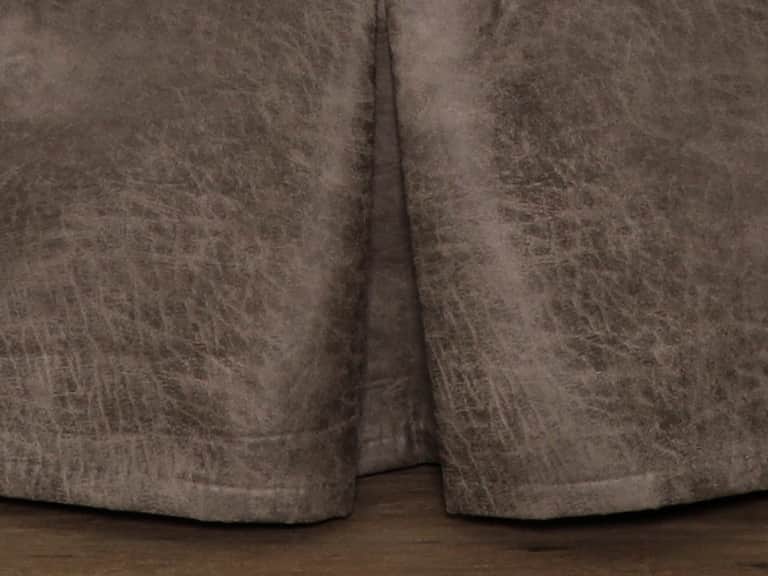
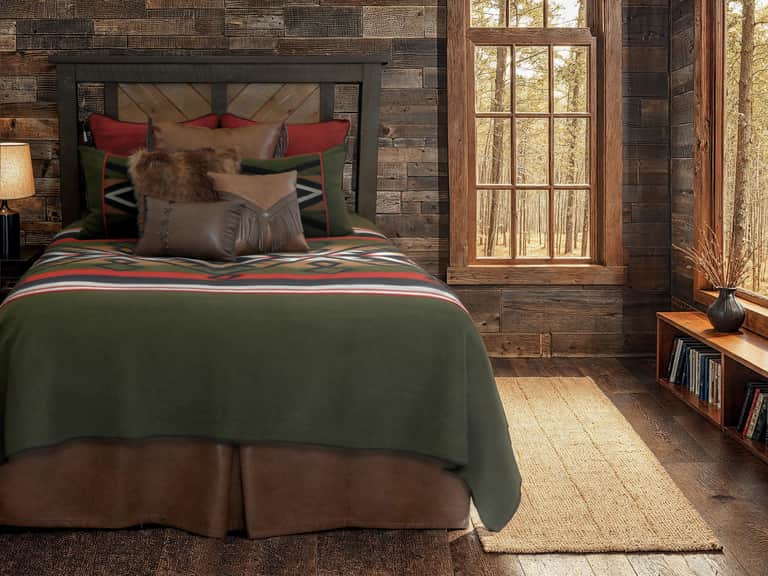
The Spearhead Dusk Bed Skirt anchors a Western-inspired palette with a steely blue tone and a tactile richness born of polyester chenille. Accented by Shale faux leather and authentic leather fringes, this piece embodies a curated texture that adds depth to the room’s base layer. It’s not merely decorative; it contributes to the room’s atmosphere by providing a tactile edge that invites touch and movement around the bed, softly guiding the eye toward the ensemble’s coherence.
Carefully coordinated with Wooded River’s Spearhead Dusk bed set, the bed skirt helps conceal under-bed storage while offering a finished silhouette. The material’s weight and fringe details are designed for durability in daily use, allowing the look to age gracefully rather than fade into fashion’s fickle memory.
Spearhead Dusk Bed Skirt — Wooded River
SKU: 5302
Price: $240.00
Description: Coordinating with the Spearhead Dusk bed set, this bed skirt adds a steely blue western-inspired finish with a soft feel of polyester chenille, accented by Shale faux leather and authentic leather fringes. The result is a distinctive western look with texture that ties the room together.
A Thoughtful Close: The Bedroom as a Natural Studio
To design a nature-inspired sleep space is to accept a little restraint: one must resist the impulse to constantly refresh with new textures or loud color statements. Instead, one should accumulate textiles that age with grace, that patina with use, and that support a healthier climate for rest. The three brands—Vispring, Coyuchi, and Sferra—offer not merely products but a philosophy: that luxury need not be loud to be transformative. In a room that is calm, the sleeper finds space for memory, contemplation, and, most importantly, sleep that feels earned rather than hurried.
The Sleeping Room’s future is ethically aware and materially generous—a place where cotton is grown with respect for soil, where linen is woven from flax with a harvest cycle that honors the land, and where wool is processed in a manner that preserves tradition while advancing modern sustainability. If you’re building a narrative around brook-side mornings and forest-breath nights, these natural fibers become not just a choice, but a story you tell every night with your sheets, pillowcases, and duvet covers.
Starter Sitemap and Suggested Articles
- How to Design a Calming Bedroom with Natural Materials
- Comparing 100% Cotton Percale, Sateen, and Linen for Sleep Surfaces
- Organic vs. Non-Organic Bedding: What the Certifications Really Mean
- Materials Spotlight: Linen’s Texture and Sustainability Story
- Care Guides: Keeping Cotton, Linen, and Wool Fresh Across Seasons
Conclusion: A Renewal of the Sleep Space
Choosing natural bedding is a choice about the body’s comfort, the room’s atmosphere, and the broader ethics of production. Vispring, Coyuchi, and Sferra offer windows into a world where luxury sits alongside responsibility, where fabrics become a soft measure of care for the person who lies beneath them and for the world that cradles them. The bed, then, is not just a place to rest; it’s a ritual—a daily, intimate act of care—a brook running quietly through the night, offering a natural rhythm to sleep that is as old as human rest itself.